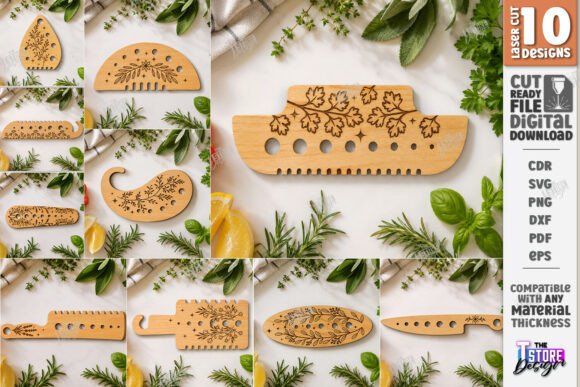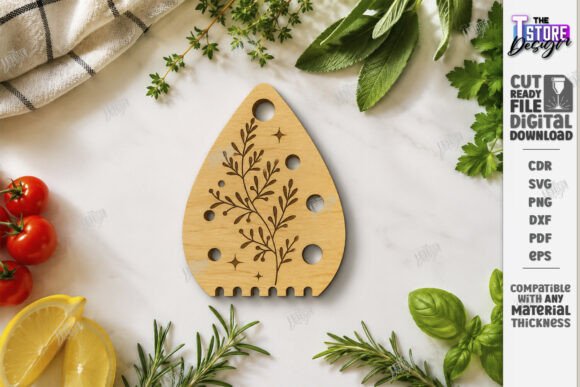
Herb Stripper Laser Cut Kitchen Gadget
As a designer who spends half my life staring at stitch density charts and the other half trying to convince clients that "cute" doesn't always mean "commercially viable," I approach every new design file with a mix of curiosity and skepticism. When Herb Stripper Laser Cut Kitchen Gadget landed in my inbox, labeled under Art Amp and categorized as a Laser Cutting vector art piece, my initial reaction was practical: this is not a standard floral bouquet or a generic kitchen utensil. It is a specific tool—a wooden herb stripper designed for rosemary and thyme. For an embroidery artist, this presents a unique challenge and opportunity. Can a rigid, functional object translate well into soft goods? Does it have enough visual personality to stand out in a crowded Etsy shop, or will it get lost in the sea of generic food-themed designs?
First Impressions: The Mood and Visual Personality
The first thing you notice about Herb Stripper Laser Cut Kitchen Gadget is its whimsical yet functional aesthetic. Unlike traditional botanical illustrations that focus on the beauty of the flower, this design focuses on the utility of the leaf-stripping process. The laser-cut plywood texture implied by the source material suggests a rustic, farmhouse vibe that is currently very popular in home decor. Visually, it feels grounded and tactile. Even before stitching, you can imagine the grain of the wood against a linen apron.
From a design perspective, the shape is clean but detailed. The slotted nature of the herb stripper provides natural negative space, which is a dream for machine embroidery because it breaks up solid blocks of thread. This prevents the dreaded "stitch fatigue" where dense fill stitches make a fabric stiff and unwearable. Instead, this design invites the use of running stitches to mimic the slots and perhaps a satin stitch outline to define the edges. It creates a mood that is cozy, domestic, and slightly nostalgic—perfect for the modern crafter who values handmade authenticity over mass-produced perfection.
Real-World Application: Where Does It Fit?
I recently tested this concept on a custom order for a boutique client who wanted a cohesive set of gifts for a housewarming party. We needed something that screamed "kitchen" without being cliché like a giant fork or spoon. Herb Stripper Laser Cut Kitchen Gadget became the centerpiece of our tote bag design and sweatshirt embroidery collection. Here is how it performed in real-life scenarios:
- Custom Apparel and Aprons: When placed on a heavyweight cotton canvas apron, the design looked incredibly professional. The contrast between the smooth satin stitch outlining the wooden tool and the textured weave of the apron created a beautiful interplay of materials. It felt like a tribute to the craft of cooking itself.
- Baby Embroidery and Nursery Decor: Surprisingly, this design worked well for nursery items. On a muslin swaddle or a small pillow cover, the simple lines of the herb stripper softened into a charming motif. It’s less aggressive than a cartoon chef and more educational, making it a great choice for parents who want subtle, sophisticated baby clothes.
- Kitchen Towels and Tea Towels: This is arguably the best use case. The rectangular shape of many tea towels complements the vertical orientation of the herb stripper. Using a single color thread, such as sage green or terracotta, allowed the design to pop without overwhelming the textile. It turned a basic kitchen towel into a personalized gift that felt curated and thoughtful.
- Embroidered Patches: For the Etsy seller looking to expand their catalog, converting this into an iron-on patch is a smart move. The defined edges make for a clean applique or multi-color satin stitch job. These patches add value to denim jackets or beanies, offering a touch of rustic charm that appeals to the maker community.
Technical Considerations and Pitfalls
While the design has high potential, it is not without its challenges. As an experienced reviewer, I must highlight where this design requires careful handling. Herb Stripper Laser Cut Kitchen Gadget relies heavily on detail to convey its identity. If you attempt to stitch this in a tiny hoop size on a stretchy knit fabric, you risk distortion. The fine details of the laser-cut slots may merge together if the stitch density is too high or if the stabilizer is insufficient.
I strongly advise testing the design on scrap fabric first. Check the thread color contrast meticulously. On dark fabrics, a light-colored thread might disappear into the shadows of the design, while on light fabrics, a dark thread might look too harsh. Always inspect small details after stitching; sometimes, what looks clear on screen becomes a muddy blob on fabric due to thread tension issues. Also, consider the fabric texture. Rough burlap might eat away at fine running stitches, whereas smooth percale or linen will hold the definition beautifully.
Another critical point is the application surface. Curved surfaces like caps or hats require significant hooping skill to avoid puckering. If you are using this for holiday embroidery on hats, ensure you use a proper tear-away or cut-away stabilizer to maintain the integrity of the design during wear. For commercial embroidery, consistency is key. You cannot afford for one finished product to look significantly different from another due to poor stabilization techniques.
Enhancing Visual Appeal and Product Value
Using Herb Stripper Laser Cut Kitchen Gadget elevates your brand image by showing attention to niche interests. It signals to the buyer that you understand specific hobbies and culinary tools. This specificity builds trust and engagement. Customers are more likely to buy from a shop that offers specialized, well-executed designs rather than generic clip-art. Furthermore, the design’s versatility allows for creative variations. You can pair it with matching herbs like rosemary sprigs or thyme clusters to create a larger composition, increasing the perceived value of the handmade product.
For digital product sellers, this design is excellent for creating printable mockups. Showcasing the herb stripper on various backgrounds helps buyers visualize the final result, reducing hesitation and boosting sales. Whether you are selling the digital embroidery file itself or the physical goods, the quality of the presentation matters. Ensure your photos highlight the texture and clarity of the stitches.
Practical Designer Notes for Success
To get the most out of this design, follow these practical steps:
- Test Stitch Density: Review the stitch count. If it is too dense, reduce the fill percentage or switch to a lighter stitch type to prevent fabric stiffness.
- Confirm Hoop Size: Ensure your hoop accommodates the design with adequate margin for trimming and handling.
- Use Proper Stabilizer: Match the stabilizer to the fabric weight. Heavy fabrics need heavy stabilizers; delicate fabrics need lightweight options.
- Check Licensing: Before selling finished items or using this in design assets, confirm the licensing terms. Some vectors allow commercial use, while others are restricted to personal projects only.
- Mockup in Black and White: View the design in grayscale to ensure the contrast holds up without relying on color alone.
In conclusion, Herb Stripper Laser Cut Kitchen Gadget is a versatile, high-potential design that bridges the gap between functional tool art and decorative embroidery. It works beautifully for small shop products, craft business inventory, and personalized gifts. By paying attention to technical details like stabilizer choice and thread contrast, you can transform this laser-cut vector into a stunning embroidered reality that delights customers and strengthens your brand identity.