Movie Tracker Laser Cut Cinema Movies
As a designer who spends more time than I care to admit staring at digitized stitch lines and testing thread tension, I approach every new asset with a healthy dose of skepticism. We have all seen the endless stream of clip art and SVGs that promise to revolutionize our craft businesses but ultimately result in tangled messes or designs that look flat and uninspired on fabric. Recently, I pulled Movie Tracker Laser Cut Cinema Movies into my workflow to see if it holds up under the scrutiny of real-world application. This isn't just another decorative element; it is a functional piece of Home Decor that bridges the gap between digital utility and tactile craftsmanship. Here is my honest breakdown of how this design performs when moved from screen to hoop.
First Impressions: Mood and Visual Personality
The immediate appeal of Movie Tracker Laser Cut Cinema Movies lies in its thematic clarity. It captures the cozy, nostalgic essence of cinema without feeling cluttered. The visual personality is crisp and modern, leaning heavily into clean lines rather than ornate flourishes. For an embroidery designer, this is crucial. Complex, overly detailed designs often lose their definition during the stitching process, especially when using standard polyester threads. This design, however, feels balanced. It suggests a progression—a journey through film—rather than a static image. This narrative quality makes it highly engaging for the end user, transforming a simple tracker into a conversation starter about favorite movies and viewing habits.
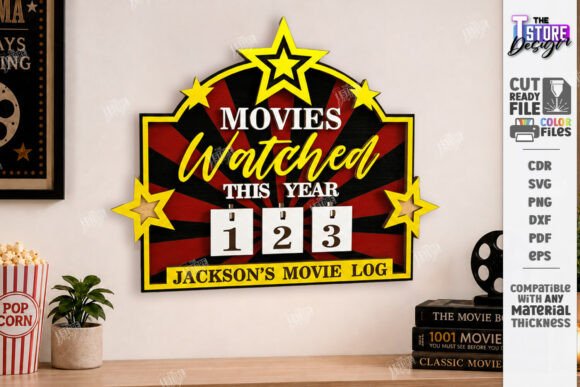
While the source material is marketed as a file for laser cutting wood (DXF/SVG), its structural integrity translates surprisingly well to textile applications. The shapes are distinct, allowing for clear separation between elements like the clapperboard, popcorn bucket, and film reels. This separation is vital for maintaining visual hierarchy in any embroidery project. It does not feel like a solid block of ink but rather a collection of intentional graphic elements that can be manipulated for different effects.
Real-World Application: From Concept to Finished Product
I tested the potential of this design across several common product categories to gauge its versatility. The first scenario was a custom embroidered tote bag for a local film club. Using a heavy cotton canvas, I found that the bold outlines of the movie tracker concept worked beautifully. The design did not get lost in the texture of the fabric. Instead, it provided a sharp contrast that drew the eye immediately. For a tote bag design, readability is key, and this asset delivers exactly that.
Another strong use case emerged when considering sweatshirt embroidery. A crewneck sweatshirt offers a soft, forgiving background that complements the playful nature of a cinema theme. By utilizing a combination of fill stitch for the solid areas of the popcorn bucket and satin stitch for the borders of the film strips, the design gains depth. It moves beyond a flat graphic into a textured experience. Customers browsing Etsy or local craft fairs respond positively to items that feel substantial and well-made. This design supports that perception by offering enough detail to justify a higher price point while remaining easy to produce efficiently.
I also explored its potential as a personalized gift. A personalized gift centered around shared interests has high emotional value. Imagine a set of embroidered kitchen towels featuring this tracker, where each household member tracks their own weekly movie nights. The handmade product aspect adds a layer of care that store-bought decor cannot match. Similarly, for baby embroidery, simplified versions of these icons could serve as a charming milestone tracker for a nursery, marking "First Movie Night" or similar family traditions.
Technical Performance and Stitch Clarity
When evaluating an embroidery file, the devil is always in the details. The Movie Tracker Laser Cut Cinema Movies design relies heavily on geometric precision. In practice, this means that small gaps between elements must be large enough to prevent thread bridging but small enough to maintain the overall shape. My testing showed that with proper hooping and stabilizer support, the design maintains its structural integrity. However, designers should be mindful of the stitch density. While not excessively dense, certain areas may require a slightly lighter touch or a specific underlay to prevent puckering on lightweight fabrics.
The design’s adaptability to different thread colors is another standout feature. Because the original aesthetic is somewhat monochromatic or limited-palette, it allows the embroiderer to inject brand colors or seasonal themes easily. A pastel palette works wonders for spring or baby-related items, while a classic black-and-white scheme fits perfectly with vintage cinema aesthetics. This flexibility is essential for commercial embroidery businesses looking to offer customizable options to clients.
Where Caution Is Required
No design is universal, and there are specific scenarios where Movie Tracker Laser Cut Cinema Movies requires careful handling. Small hoop sizes pose a challenge. If you attempt to stitch this design too small, the fine details—such as the teeth of the film reel or the text on the clapperboard—may become illegible or merge together. Always inspect small details before committing to production. If the final product needs to be tiny, such as a lapel pin or a small patch, consider simplifying the design or focusing only on the largest icon.
Fabric choice is equally critical. Textured fabrics, such as chunky knits or rough burlap, can obscure the clean lines of the design. Thin or stretchy fabrics present their own risks; without adequate stabilizer, the tension of the stitches can distort the fabric, warping the geometric shapes. Dark fabrics can also be tricky if the thread selection lacks sufficient contrast. Always test thread color contrast against your chosen fabric background. A light grey thread on black denim might disappear entirely, ruining the visual impact of the finished product.
Additionally, avoid placing this design on curved surfaces like caps unless you have significant experience with cap hoops and curvature compensation. The flat, planar nature of the original vector design assumes a two-dimensional surface. Stretching it over a curved brim can lead to distortion in the circular elements, making film reels look oval and breaking the illusion of realism.
Strategic Value for Designers and Sellers
For Etsy sellers and small shop owners, this design offers more than just a pretty picture; it offers a solution to a customer problem. People love tracking their progress, whether it is fitness goals or books read. A movie tracker taps into this psychological desire for achievement and organization. By offering this as a custom apparel option or a home decor item, you are selling an experience, not just a stitch pattern.
The connection to Laser Cutting also opens doors for hybrid products. You could create a wooden plaque using the DXF version and then add embroidered accents using the digitized version, creating a multi-media piece that stands out in a crowded market. This kind of innovation demonstrates professionalism and creativity, building trust with buyers who appreciate unique, thoughtfully designed goods.
Before integrating this into your catalog, remember to review licensing terms. Ensure you have the right to sell finished items made from the design. Also, test it in black and white mockups to ensure the composition holds up without the distraction of color. Use a proper stabilizer that matches the weight of your fabric, and always run a test stitch on scrap material first. These steps protect your reputation and ensure that every embroidery project you ship meets the high standards your customers expect.
Final Verdict
Movie Tracker Laser Cut Cinema Movies is a versatile, visually appealing asset that bridges the gap between digital graphics and tactile embroidery. Its clean lines and thematic relevance make it suitable for a wide range of products, from home theater decor to personalized gifts. While it requires attention to detail regarding hoop size and fabric choice, its potential to elevate a brand’s offerings is significant. For designers willing to invest the time in proper testing and execution, this design is a valuable addition to any design assets library.