Deer Mountain Layered Laser Cut File for Home Decor
As a brand designer and content marketer, I spend my days dissecting what makes a visual stick in the mind of a consumer. We often get caught up in color theory or typography trends, but sometimes the most powerful tool is a simple, well-executed graphic design asset that speaks directly to an audience’s desire for authenticity. Recently, I evaluated a specific file—the Deer Mountain Layered Laser Cut File—for a potential integration into a lifestyle brand’s upcoming seasonal campaign. My goal was not just to look at it as a pretty picture, but to assess its utility in real-world marketing visuals, brand identity systems, and commercial design projects.
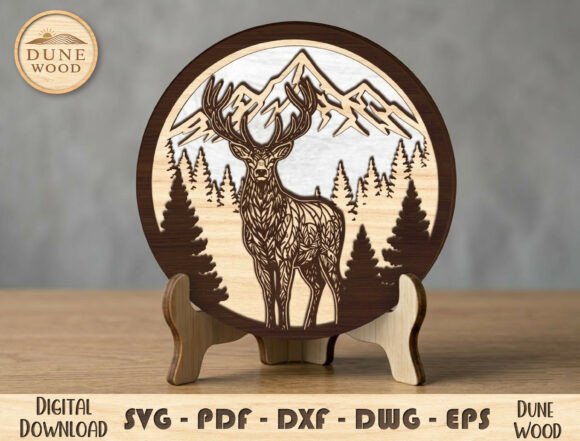
The first impression of this asset is immediate and grounding. It carries a distinct rustic charm that feels both premium and approachable. When you see a detailed round design featuring a majestic deer standing in a forest with mountain scenery in the background, you are not just looking at a shape; you are looking at a mood. This mood translates directly to audience perception. For brands targeting nature lovers, outdoor enthusiasts, or those who appreciate handmade aesthetics, this design element signals warmth, stability, and a connection to the natural world. It avoids the clutter of overly complex illustrations while maintaining enough detail to feel like a high-quality illustration rather than a generic clipart. In the context of home decor and laser cutting, this asset offers a sophisticated way to elevate products without overwhelming the viewer.
To understand its practical value, let us frame this review around a real marketing project. Imagine a small business owner launching a new line of handcrafted wooden coasters or wall art. They need a cohesive visual strategy for their product launch. They require social media graphics, packaging inserts, and perhaps a digital ad campaign. The challenge is creating a unified look that feels professional yet artisanal. This is where the Deer Mountain Layered Laser Cut File becomes invaluable. Because it is designed for laser cutting, it inherently suggests texture and depth. Even when used digitally as a PNG design or SVG design, it brings a tactile quality to screen-based marketing visuals. It allows the brand to maintain a consistent theme across disparate platforms, from Instagram posts to Facebook ads, ensuring that every touchpoint reinforces the same emotional tone.
In terms of brand identity, this asset supports stronger first impressions by providing a clear visual anchor. When integrated into logo design or used as a decorative brand element, it helps establish a niche immediately. It is particularly effective for small business branding that wants to communicate heritage, craftsmanship, or outdoor living. By using this design bundle component, marketers can create a recognizable symbol that audiences associate with quality and care. This consistency builds audience trust over time. When a customer sees this recurring motif on a product label, a website header, or an email banner, they begin to recognize the brand’s personality before they even read the copy. This is the power of strong visual hierarchy and repeated exposure.
The versatility of this asset extends far beyond physical products. In the realm of content marketing, it can be adapted for various editorial designs and lead magnets. For instance, a blog post about sustainable living could use a subtle version of this graphic as a featured image or section divider. A printable promotion for a weekend market could feature the full layered design to draw attention. Furthermore, because it is a layered file, designers have the flexibility to experiment with spacing and balance. You might separate the deer from the mountains to create different focal points depending on the layout. This adaptability is crucial for modern design workflows, where assets must perform well on mobile screens, desktop websites, and print materials alike.
However, no single asset fits every scenario. There are specific contexts where the Deer Mountain Layered Laser Cut File requires careful consideration. For formal corporate branding or dense information layouts, this rustic aesthetic might clash with the desired tone of sleek minimalism or authority. If your brand relies heavily on sans serif fonts and clean lines, this organic, detailed illustration could compete with the main message rather than supporting it. Similarly, in text-heavy ads or small mobile graphics, the intricate details of the forest and mountains may become muddy or indistinct. In these cases, it is essential to test readability in small sizes and ensure the asset does not distract from the call to action. It works best when given space to breathe, such as in hero graphics, campaign headers, or as a standalone decorative element on packaging accents.
From a practical brand designer’s perspective, there are several steps to take before integrating this asset into a paid campaign or client work. First, always test it with your existing brand color palette. Does the earthy tone of the design complement your primary colors, or does it create visual noise? Second, check black and white usage. Since this is a laser cut file, it often relies on contrast between positive and negative space. Ensure that when converted to monochrome for printing or specific ad formats, the silhouette remains legible and impactful. Third, place it inside real campaign mockups. Seeing the design on a actual product package or within a Canva template provides a much clearer sense of scale and proportion than viewing it in isolation on a blank canvas.
Typography pairing is another critical factor. This design asset pairs exceptionally well with serif fonts that evoke tradition and elegance, or handwritten fonts that emphasize the handmade aspect of the brand. It can also work with display fonts if the goal is to make a bold statement. However, it may struggle to integrate seamlessly with ultra-modern, geometric sans serif fonts unless the overall composition is carefully balanced. Review the spacing and balance closely to ensure the text and the graphic do not fight for dominance. Additionally, confirm commercial licensing before using it in any business branding or digital product visuals. Understanding the rights associated with the SVG design or PNG design ensures that your marketing efforts remain legally sound and professional.
Ultimately, the Deer Mountain Layered Laser Cut File is more than just a decorative shape; it is a strategic tool for content creators and creative entrepreneurs. It supports marketing goals by enhancing product presentation and improving engagement through emotional connection. Whether you are designing packaging inserts, preparing event flyers, or updating your social media covers, this asset adds a layer of sophistication and narrative depth. It helps bridge the gap between digital marketing visuals and physical product experiences, creating a holistic brand identity that resonates with today’s consumers. By using it thoughtfully, respecting its limitations, and integrating it consistently, you can create memorable campaign visuals that stand out in a crowded marketplace. For anyone in the home decor, outdoor lifestyle, or handmade goods sector, this design asset offers a reliable foundation for building a cohesive and attractive brand presence.